A few years ago I read the words of a wise person who realized that politics will not save us. This person suggested our living Christian lives will change those confused by the new normal that is a detriment to the true self-gift. Who are we called to be? As Christians we are baptised into Christ to be the difference. Will our vote make the difference? It will make a difference but THE difference is made by our life, our reaching out, our tapping into the saving power of Christ the Way to Truth and Life. I am praying each day that I may know God's desire for me to make a difference in someone's life. I accept my imperfections and the struggles of others. I am loved. They are loved. To be present to one life, those near me, one life at a time, born and unborn, old and young. We ask this from our governing servants - the freedom to make a difference.
"For freedom Christ set is free." Galatians 4


What we ask of governing servants is the freedom to make a difference.
A few years ago I read the words of a wise person who realized that politics will not save us. This person suggested our living Christian lives will change those confused by the new normal that is a detriment to the true self-gift. Who are we called to be? As Christians we are baptised into Christ to be the difference. Will our vote make the difference? It will make a difference but THE difference is made by our life, our reaching out, our tapping into the saving power of Christ the Way to Truth and Life. I am praying each day that I may know God's desire for me to make a difference in someone's life. I accept my imperfections and the struggles of others. I am loved. They are loved. To be present to one life, those near me, one life at a time, born and unborn, old and young. We ask this from our governing servants - the freedom to make a difference.
Pope Francis and the Enviornment
This is an answer I just wrote to answer why Pope Francis is big on the environment. It is amazing how my Professor of Social Teaching knew two years in advance that the next social document of the Church would be on the environment. "And that is because of a greater reason that Pope Benedict advised. He believes that if we don't state strongly about the environment we cannot speak out against destruction of the environment of the human body. This is similar to Pope Leo's document Rerum Novarum at the time of socialism. People thought we needed to stay out of the issue of labor. The Pope said we are losing souls. The issue of the environment is in the line of our Social Teachings since Rerum Novarum. Pope Benedict began to emphasis it. If we dis it we are not helping pro-life issues. I know that students in colleges are being taught that the Church is the reason the environment is being destroyed. I found this out in 1998 after a presentation to college kids."
Live Christ! Give Christ! Prayers for the New Evangelization
 |
| The perfect prayer companion for the film Media Apostle |
Evangelization has to do with the calling of every baptized
person. Evangelization is our response
to Baptism – and in turn as we invite others they respond through baptism or a
renewal of their baptism.
Pope Francis’s first letter, Evangelii Gaudium – Joy of the
Gospel – outlines the four proposals of evangelization. Each of these is
prayerfully considered in this new prayerbook.
1. First we need a
personal encounter with Jesus Christ. In
the forward to Live Christ! Give Christ!, the president of the pontifical council for the promotion of the new
evangelization, Archbishop Fisichella, wrote:
Pope Francis says
this is to cultivate an interior space, moments of adoration, prayerful encounter
with the Word, sincere conversations with the Lord. We need to focus on
contemplation. The prayers in this book are great primers as we enter into the
presence of God. Archbishop Fisichella says these prayers will help us get past
the voices of secularism, agnosticism, and relativism. They lead us to a deeper
meaning in life. They guide us to a profound listening and give us a greater
capacity to deepen our relationship with Jesus and our own conversion. The
title of the prayerbook also sums up the contents. We are invited to live
Christ and find that our response is evangelization. Alberione said that
apostles who pray overflow like a fountain. So our response, called
evangelization, will naturally follow our personal encounter with Christ.
 2. The second
proposal of the new evangelization is the proclamation of the Gospel to engage
the culture. The chapter Evangelizing in
a Communications Culture leads us into prayer for using the new media, for
Incarnating Christ in the Culture. We are to incarnate ourselves as we grow
into Christ…
2. The second
proposal of the new evangelization is the proclamation of the Gospel to engage
the culture. The chapter Evangelizing in
a Communications Culture leads us into prayer for using the new media, for
Incarnating Christ in the Culture. We are to incarnate ourselves as we grow
into Christ… “Knead me Lord Jesus, in the world of communication as Eucharistic bread that will nourish other’s minds and hearts.”
3. Another
proposal for the New Evangelization is the transformation of the social,
economic, and political orders leading to true liberation. The prayer chapters
on the Word of God, The Holy Eucharist, and Prayers of Reconciliation and
Forgiveness assist in our understanding that God is with us in the seemly
impossible task. As Pope Francis says
“The very heart of the Gospel is life in community and engagement with others.”
Praying with St. Paul is another chapter that fulfills this mandate
wonderfully. Paul knew how to engage the culture and change the world through
God’s good news.
4. Fourth and
final in the priorities of the New Evangelization is unity among believers and
all people of faith. Today we live in a culture of communication. It is our
meeting point, just as the Areopagus was the meeting point of the culture Paul
evangelized. The chapter entitled Prayers for those Engaged in the New
Evangelization reminds us that we are constantly in communication with others
in so many ways.
Our choices are to be informed by the Gospel. We are in need
of evangelization first – before we set out to evangelize and discern how to
respond to issues with the Gospel message.
The prayer book starts out with a chapter on Prayers to the
Holy Trinity – the first and perfect communion of community and the prime
communicators. We consecrate ourselves to the Trinity so that we are in that
intimate communication. We pray to the Holy Spirit so that our life is
transformed.
With the Holy Spirit, Mary is always present. The chapter on
prayers to Mary, Queen of Apostles reflects that she is always present in the midst
of the evangelizers. She joined the apostles that first Pentecost. We pray for
a new Pentecost along with Mary, Mother of the Church. Without her we can never
truly understand the New Evangelization.
Pauline Books & Media

Pope Francis' Prayer to Mary Mother of the Living Gospel
 Mary, Virgin and Mother,
you who, moved by the Holy Spirit,
welcomed the word of life
in the depths of your humble faith:
as you gave yourself completely to the Eternal One,
help us to say our own “yes”
to the urgent call, as pressing as ever,
to proclaim the good news of Jesus.
Filled with Christ’s presence,
you brought joy to John the Baptist,
making him exult in the womb of his mother.
Brimming over with joy,
you sang of the great things done by God.
Standing at the foot of the cross
with unyielding faith,
you received the joyful comfort of the resurrection,
and joined the disciples in awaiting the Spirit
so that the evangelizing Church might be born.
Obtain for us now a new ardour born of the resurrection,
that we may bring to all the Gospel of life
which triumphs over death.
Give us a holy courage to seek new paths,
that the gift of unfading beauty
may reach every man and woman.
Virgin of listening and contemplation,
Mother of love, Bride of the eternal wedding feast,
pray for the Church, whose pure icon you are,
that she may never be closed in on herself
or lose her passion for establishing God’s kingdom.
Star of the new evangelization,
help us to bear radiant witness to communion,
service, ardent and generous faith,
justice and love of the poor,
that the joy of the Gospel
may reach to the ends of the earth,
illuminating even the fringes of our world.
Mother of the living Gospel,
wellspring of happiness for God’s little ones,
pray for us.
Amen. Alleluia!
From The Joy of the Gospel, Apostolic Exhortation of Pope Francis
The Vatican Presentation on Social Media. Surprising!

Evangelization and Catholic Media

Votive Mass of the Queen of Apostles opened our day. Then we began the presentations. I will blog them in order although they will move down the feed as I go!
- The Vatican and Digital Media: Fr. Paul Tighe
Thoughtful ignorance to thoughtfull uncertaintly. We are encouraged to use new media, the experiment and to learn. Fr. is part of the team for the @Pontifex The Pope received a lot of attention for the twitter account. It is where we need to be - to bring the church into the arena. This is worth doing. This is not a fad. We are close to 10 million followers in all languages. The Latin feed is for those who love playing around with Latin tweets. Instead it received so many followers! There is a lot of retweeting, like the scattering of the seed. News.va is getting revised to continue updating its format and its feed. 50-60 thousand people go on each day. The Pope App allows you to see the Pope and watch events live. "The Pope in your pocket" though this Pope is in nobodies pocket. Facebook is interesting. The most interest is around spirituality. One message of the Pope, the New Evangelization Conference in the Philippines- Pope's first English presentation. There were 250,000 shares within the half-hour. Our youth are expressing themselves, forming relationships and creating community in another way. A change in communication itself. It is the user who is determining where we are going or not going with these developments. We don't know which platforms will develop. It is changing the church's nature in its manifestations. Benedict said theologians have to reflect on this because theology is always a reflection on how our culture is changing. Change that is similar to the changes in the way the younger generation is. "christians in social media are becoming citizens in the arena - citizens who fit in, who don't stick out, etc. also bring faith into this reality. Digital is very real. Increasing numbers of people are engaged. It is an existential dimension of their lives. We need to rethink what we are doing. We need to learn the new language for the digital continent - how we have our conversations. We grew up with the idea of the pulpit. We were at the center and you were out there listening. New Media is different - it is shared and that is how it gets out there. It is interactive. We have to engage the questions. Most of these conversations are happening in the common forum. We don't know who is listening. Trying to make scenes.. Pope to listen, to converse and to encourage in the digital world. So many people have need for encouragement. We don't text very well - encyclicals etc, as a church. In a digital arena we need words images and sounds. Before we were literate we were v good with beauty - stained glass, music ... "warm peoples hearts" says Benedict. Give them a lift and something that gives them pleasure. The icons we use do not presume we know what we are talking about anymore: the words - lent, confession, Vatican II. We don't want to lose the theological language but need entry level language..
Social Network of the New Evangelization Generation

Pope Francis on Evangelization
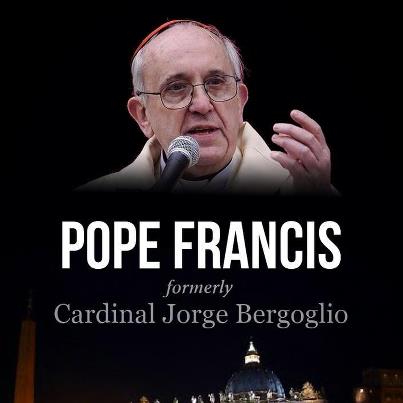
"Today we are called to make this our intuition," the Cardinal said. "Even though at times we may be tired, we are called to proclaim the Gospel always, especially with zeal, which means with love." The new Pope - he continued - "urged us to come out of ourselves, not to yield to the temptation of egocentricity, but to go to the needy, to bring a proclamation of joy and hope to all those organizations marked by material and spiritual poverty. "As Christians engaged in the work of evangelization "we can give our contribution to the Petrine ministry, continuing to lavish our commitment with generosity and love," said Cardinal Filoni.
Then talking about his experience in the Conclave, he remarked: "It was very emotional, as one feels the great responsibility. We Cardinals 'indicated' not elected the new Pope, he was chosen by God. If Mother Teresa prayed to be 'a pencil in the hands of God', for me this election was a dash in God’s plan, it was a unique experience." Cardinal Filoni confirmed that the Pope chose the name Francis referring to Francis of Assisi, "although this choice is significant of his deep humility." (PA) (Agenzia Fides 14/03/2013)
Foundation for Evangelization through the Media

-
Proclaim the Gospel, its message and values, through
all types of modern media, especially through digital media;
-
Use the latest media technologies to contribute to
expanding the Church's communication;
-
Facilitate cooperation and collaboration among the
various Christian communities that are already active in the media;
-
Develop with the Church a coherent global strategy to
achieve these objectives.
http://www.fem-roma.org/
Subscribe to:
Posts (Atom)